Our Goals
REVIVING SHIVALIK
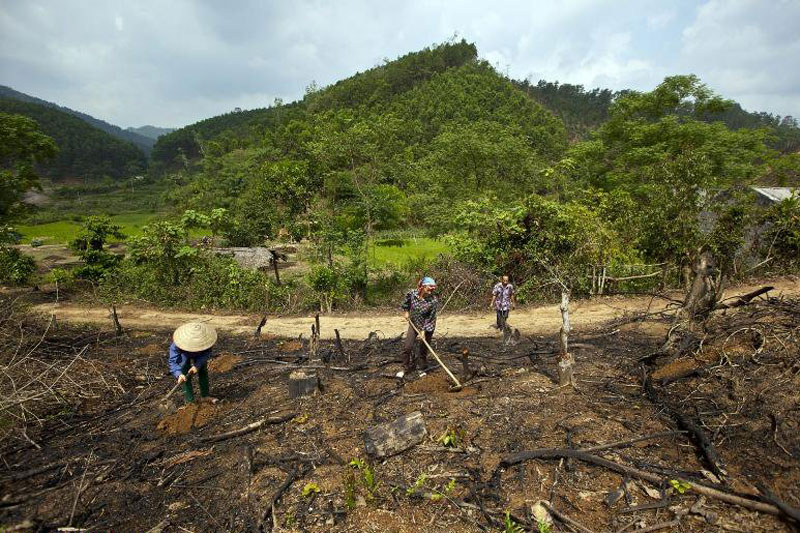 The Shivalik Hills is a mountain range of the outer Himalayas. It is about 2,400 km (1,500 mi) long enclosing an area that starts almost from the Indus and ends close to the Brahmaputra. The width of the Shivalik Hills varies from 10 to 50 km (6.2 to 31.1 mi), their average elevation is 1,500 to 2,000 m .In some Sanskrit texts, the region is called Manak Parbat. Shivalik literally means 'tresses of Shiva’ .Other names include Churia hills, Chure hills, and Margalla Hills. Geologically, the Shivalik Hills belong to the Tertiary deposits of the outer Himalayas. The remnant magnetization of siltstones and sandstones suggests a depositional age of 16-5.2 million years with the Karnali River exposing the oldest part of the Shivalik Hills in Nepal. In Punjab, hilly region from Pathankot to roopnagar is also a part of historic Shivalik range.
Distt. Hoshiarpur is also wear a frill of this hill. A strip of 10 kilometer wide along with border of Himachal Pardesh is feature of this land. They used to be dense forests and big varieties of fauna and flora. Most of the hilly land has been naked by falling trees and natural habitats of wild animals have been destroyed and they are forced to move towards residential localities. In result, they have to clash with human and at last human wins. With encroachment of human for illegal mining ,digging and defacing moulds for converting natural hills in plains and fields or for personal as well as commercial picnic and recreation spots all this belt has been lost its past glory. To protect natural structure of Shivalik hills, natural fauna and flora with its geographical identity, our society doing efforts to revive Shivalik wild life by planting trees, maintaining water containing spots and reinstating habitats (natural as well as artificial hanging nests) of various species of animal and birds.
- Forestation
- Protest Mining
- Condemn Human Encroachment
- Save Wild Life
- Water Embankment
PLANTATION
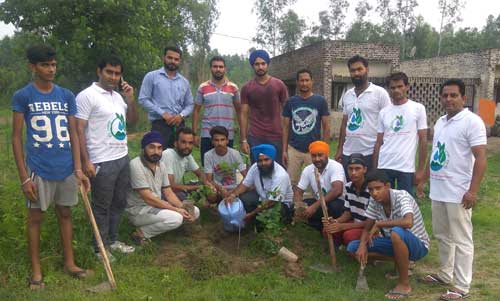 Only 3271 sq km area is under forest cover in Punjab which is 6.49% of total area of Punjab and 0.41% of India. Save Shivalik Save MotherEarth is dynamic in Hoshiarpur region, which has 688 sq km area out of 3386 sq km is under tree cover which is 20.32% of Hoshiarpur and 21% of total Punjab forest.
So what is the problem?...Problem starts when we see the graph of decreasing forest cover in India , Punjab and also in Hoshiarpur. It should be 33% of total forest area but it is 24.16% in India, 6.49% in Punjab and 20.32% in Hoshiarpur. The condition turns worse when instead of increasing or preserving the forest system starts swallowing it with an excuse of progress like expanding or building roads, canals, rest houses, private summer recreations spots (In
Kandi area) and at last not least setting up ply board factories in
Kandi region. Hoshiarpur having highest rank under forest cover in Punjab, has come under the eyes of corporate companies who started setting up factories in this region so that this forest can be consumed as raw material for these factories. last some years forest cover of Hoshiarpur has decreases 4% since earlier, which is big matter to worry.
Trees are main weapons to fight against global warning, rising temperature, waxing CO2 and droughts. Society mainly focuses on plantation of tree. In this rainy season 2017-18 we have commitment to plant more than 5000 trees in Dasuya (Hoshiarpur). Volunteers of society will plant trees and take care of them. Our society and other unions, clubs, youth sabhas, NGOs and NSS units are working together to achieve the target of plantation.
- Sapling Plantation
- Introduction of Medicinal Plants in Villages
- Imparting knowledge on values of trees
- Protecting Natural Forest
WATER MANAGEMENT
 Since green revolution, excess use of water in agriculture, decreasing rain fall, climatic changes, falling ground water table are some of the main issues to focus on. Decreasing ground water table means less water to use, less water to use means not sufficient water to drink. On the surface of ground, water is contaminated by pesticides, chemicals, fertilizers and under the surface of ground water is deepened due to excess boring/pumping and water is spoiled with uranium cadmium, lead and other particles and releasing industrial spend wash water in deep bore wells. The current situation of groundwater development in Punjab is the most critical in the country as 80 per cent of the monitored wells are considered overexploited (CGWB, 2012). Annual ground water extraction in Punjab is 31.16 billion m3 as opposed to 21.44 billion m3 availability. Very high level of ground water is being extracted in Amritsar, Fategarh Sahib, Jalandhar, Kapurthala, Mansa, Ludhiana, Moga, Nawanshahr, Patiala and Sangrur Districts. Out of the 137 blocks in the state, only 25 are safe; 103 are over exploited, 5 critical and 4 semi-critical (IDFC, 2013).Net area irrigated by wells covers 71 per cent of the total irrigated area of the state. More than 1300000 tube wells are pumping out the water from ground. On an average there are 28 tube wells per sq. km. of net sown area in Punjab alone. The rate of fall in water table was 18 cm (per year) during 1982-87; which increased to 42 cm during 1997-2002 (Hira et al, 2004) and further to 75 cm during 2002-06 (Singh, 2006).It may have raised further more than 100cms.
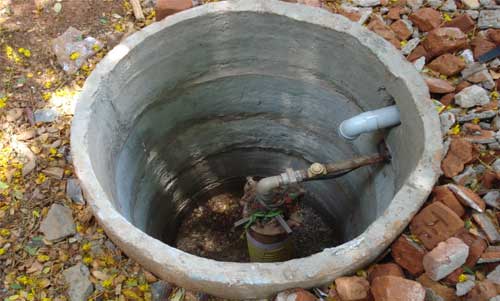
There is scope of 1200 million m3 rain water falls on Punjab region. Our efforts are to find the way to utilize rain water for ground water recharge so that deficit of 10 million m3 is (31.16 billion m3 - 21.44 billion m3=10 mill.m3) can be replaced. Even more of the rain water can be ducked and preserved. We are planning to setup GWR wells in kandi region. Construction of one well is bearing
Rs 15000 as cost of it.
- Utilize Available Water
- Protecting Water Sources
- Recycling Water
- Rain Water Harvesting
- Setup Ground Water Recharge Wells
AWARENESS CAMPAIGN
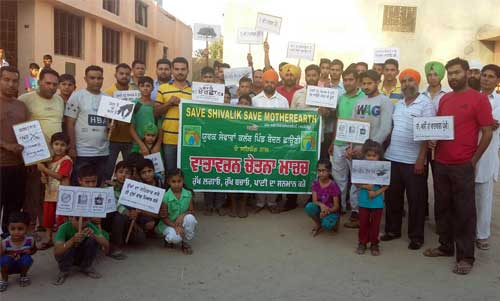 There are only 60% people, who know the word environment in term of environment saving. Only 25% of them are aware of environment pollution. Only 10% persons think that they should act to save environment. Only 3% wake up and make plans to act upon. And only 1% people are there, who worry about falling level of environment and have chalk out plans and implementing them in action. Global warming, melting ice caps, rising sea level, souring mean temperature of globe are major outcomes of environment pollution. Life style of mass particularly in rural, is so self centered, reserved and shellfish that they live like a guest on earth. They hardy try to repair gown of mother earth. Potable water is flowing to sewage and toilets. Water at surface is inadequate and contaminated where as deep ground water is mixture of uranium and other dangerous elements. Burning of residue in homes, fields, factories tells us that people are not aware of demising earth. So, this society is determined to spread awareness about environmental fall and try to involve common mass to support this issue. So society constantly hold seminars, exhibitions, make direct interaction with people in villages to create awareness about environment among commons. By all means we try to involve the students, farmers, females, children in environment saving activities.
- Organize Seminars in Villages
- Start Campaign in Schools
- Perform Dramas & Nukkar Nataks
- Hold Exhibitions in Village Festivals
- Hold Street Processions
CONDEMN ANTI-ENVIRONMENTAL ACTIVITIES
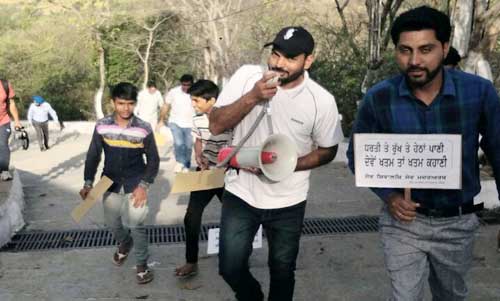 This region of Shivalik is rich in culture, wild life variety, tree species, birds’ diversity. Tree volume and variety always remain attraction of greedy businessmen. Timber has been a major raw material for hungry factories. Rich people started making rest house and recreation spot for their entertainment. Hundreds of acres jungles have been axed and converted into naked spots. Illegal mining is on high run which results in destruction and defacing of Shivalik hills. Timber smugglers cut the precious tree and harm our Natural sources. People from major cities travel and shifted to this protected old cultured region and destroy moral as well as cultural values of region.
Plywood factories and other timber based production units have been setup in this region. They have a greedy look on this dense forest and in future it will become the meal of these factories.
Encroaching and establishment of politically supported new paper mills, wine distilleries and sugar mills are highly harmful for land, air and soil. Especially for residents, who have to breathe in dirty air, to drink contaminated water and work on carcinogenic soil.
Our society makes the public awaked and unites the people to raises voice against setting up of these units in this region. We demonstrate and oppose working of AB sugar mills Randhawa.
- Protest against projects Contaminating the natural resources.
- Opposing establishment of Industrial Units that harm and destroy natural environment.